Views: 0 Author: Site Editor Publish Time: 2026-10-20 Origin: Site


Packaging manufacturers face a relentless operational challenge today. You must balance high-speed production demands against tightening global Volatile Organic Compound (VOC) regulations. Shrinking environmental footprints cannot come at the expense of output speed. Transitioning coating lines to sustainable alternatives often introduces friction. You might worry about compromising initial tack, shear strength, or operating margins. Adopting new chemistry requires careful planning and precise execution. However, modern polymer technology offers highly reliable solutions for these hurdles. This article provides a comprehensive evaluation framework for utilizing water-based adhesives on Biaxially Oriented Polypropylene (BOPP) films. We will explore the mechanical realities of film wetting and drying optimization in detail. You will learn how to evaluate vendor formulations systematically and scientifically. Our goal is to equip engineering and procurement teams with actionable insights. You can confidently migrate away from high-emission solvent systems today. Implementing these strategies helps you maintain peak carton-sealing performance.
Performance Parity: Modern water-based acrylic formulations now meet or exceed the performance profiles of legacy solvent-based systems for most standard packaging applications.
Compliance & Cost: Shifting to water-based systems eliminates solvent recovery costs, lowers insurance premiums, and ensures compliance with global environmental mandates.
Implementation Dependency: Successful deployment relies heavily on precise line controls—specifically corona treatment of the BOPP film and optimized drying oven configurations.
Decision Metrics: Procurement and engineering should evaluate vendors based on shear/peel balance, coatability at high speeds, and batch-to-batch consistency.
BOPP film possesses inherently low surface energy in its natural state. It usually measures around 29 to 31 dynes/cm. This measurement remains far too low for water-based liquids to spread evenly. Emulsions simply bead up on untreated plastic surfaces. You must implement inline Corona discharge treatment before coating begins. This electrical process bombards the polymer chains using high-voltage discharge. It oxidizes the film surface and alters its molecular structure slightly. This action raises the dyne level to at least 38 or 40. Proper corona treatment ensures adequate wetting for emulsion adhesives. Failing to maintain this surface energy leads to catastrophic delamination.
A typical water based pressure sensitive adhesive starts as a complex liquid emulsion. It consists of microscopic polymer spheres suspended evenly in water. When applied to the treated BOPP film, it quickly enters the drying oven. Water evaporates rapidly during this initial heating phase. The microscopic acrylic spheres move closer together as the liquid volume decreases. They eventually touch and push against one another. Capillary forces deform these particles, forcing them to coalesce completely. They merge into a continuous, clear adhesive layer. This resulting film now possesses the required physical properties to bond surfaces together securely.
Pressure-sensitive adhesives operate entirely on the principle of viscoelasticity. You need an optimal balance within your acrylic tape adhesive formulation. The fluid-like viscous property allows it to flow across microscopic substrate ridges. This immediate wetting action creates the crucial initial surface tack. Conversely, the solid-like elastic property provides necessary internal cohesion. This elastic nature gives the tape its structural shear strength. Finding the exact mathematical ratio between fluid flow and solid strength defines a successful formulation. If an adhesive flows too much, it leaves residue behind. If it remains too solid, it fails to grip corrugated cardboard.
Regulatory bodies worldwide continue to restrict industrial solvent emissions aggressively. Frameworks established by the EPA and REACH enforce strict limits on factory VOC output. Migrating to water-based technology serves as a highly proactive future-proofing strategy. It completely removes hazardous, flammable solvents from your primary coating facility. This transition drastically improves plant safety for all machine operators. It also lowers the risk of catastrophic fire hazards during high-speed manufacturing runs. You eliminate the heavy burden of handling highly regulated chemical waste. Facilities operating water-based lines often see significant improvements in their corporate sustainability audits.
Solvent-based adhesives historically held a distinct edge in extreme environmental conditions. They remain popular for highly specialized industrial or automotive applications. You might still specify them for ultra-low temperature freezer environments. However, modern emulsion chemistry has closed this performance gap significantly over the last decade. Today, water-based acrylics represent the definitive choice for over 90% of carton sealing tapes. They deliver excellent optical clarity, superior UV resistance, and outstanding long-term aging properties. You can trust them implicitly for both standard and heavy-duty packaging needs. The chemical cross-linking in newer emulsions handles daily transit stress easily.
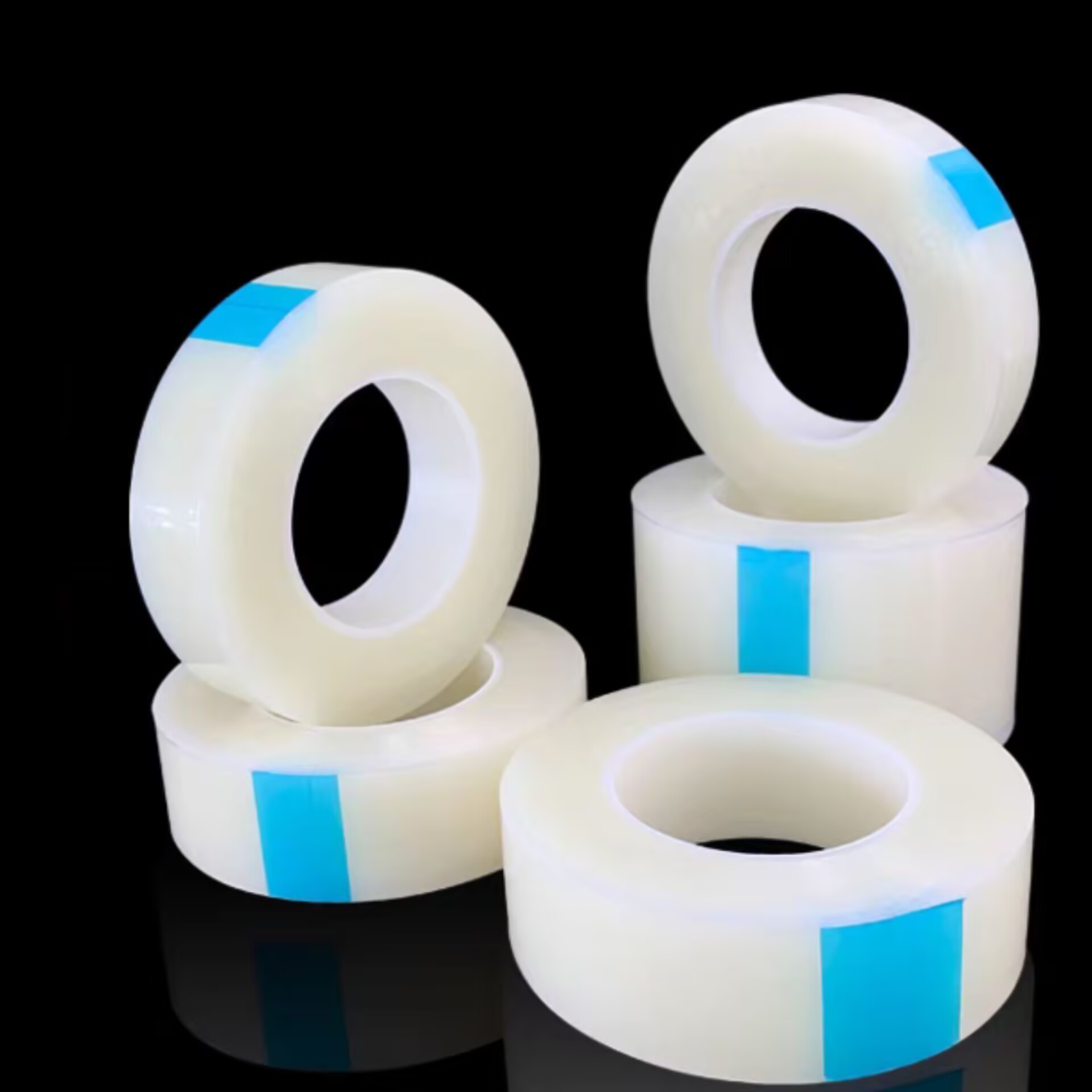
Relying solely on vendor marketing claims introduces severe operational risk. You must evaluate all adhesives using recognized global industry standards. Frameworks established by FINAT and PSTC provide objective testing baselines. They ensure testing environments remain strictly controlled for ambient temperature and relative humidity. Utilizing these standards prevents discrepancies between your lab results and the vendor data. Standardized testing allows procurement teams to compare different chemical suppliers accurately.
Tack defines how quickly an adhesive grabs a rough surface. A quality BOPP tape adhesive wets out instantly upon minimal applied pressure. Rolling ball tests measure how far a standard steel ball travels down the adhesive strip. A shorter stopping distance directly indicates higher initial tack. Loop tack tests measure the immediate tensile force required to separate a fresh bond. High tack is essential for automated carton sealing machines operating at fast speeds.
Peel adhesion tests measure the ultimate bond strength of the tape. Technicians apply the tape strip to a standardized stainless steel test plate. After a predefined dwell time, they pull the tape back at a 180-degree angle. A tensile tester records the exact force required to remove the tape. This metric reflects how well the adhesive anchors to corrugated substrates over time. Consistent peel adhesion ensures packages remain securely sealed during rough handling.
Shear strength measures the internal cohesive strength of the polymer matrix. Technicians hang a standardized static weight from a vertically applied tape strip. They record the exact time it takes for the tape to slip off the panel. High shear is absolutely critical for reliable carton sealing. Corrugated boxes constantly exert outward tension on their folded flaps. If shear holding power remains low, carton flaps will pop open during transit. Formulators often increase polymer molecular weight to boost this specific shear performance.
Standard Adhesive Performance Metrics
Performance Metric | Testing Standard Example | Practical Packaging Implication |
|---|---|---|
Initial Tack | PSTC-6 (Rolling Ball) / FINAT FTM 9 | Immediate grip on automated carton sealers. |
Peel Adhesion | PSTC-101 / FINAT FTM 1 | Long-term bond strength on corrugated boxes. |
Shear Strength | PSTC-107 / FINAT FTM 8 | Prevents box flaps from popping open under tension. |
Water possesses a much higher latent heat of vaporization than chemical solvents. Therefore, drying ovens require careful profiling and structural upgrades. You must implement phased oven temperatures across several different heating zones. If the initial heat is too high, the surface dries prematurely. This creates a defect phenomenon commonly known as "skinning." Moisture becomes trapped underneath this rapidly dried surface layer. It causes a milky appearance and severely degrades overall adhesion. Gradual temperature escalation across the oven zones prevents this defect entirely. You should monitor airflow velocity alongside the applied heat.
Fluid rheology directly impacts how well you can coat the film substrate. Viscosity control at the main coating head is absolutely paramount. Whether you use a Meyer rod or a gravure cylinder, consistency dictates success. Fluctuating liquid viscosity leads to wildly uneven coat weights. Uneven distribution compromises the final tape clarity and physical performance. You must monitor emulsion temperature closely to maintain stable fluid dynamics. Implementing automated viscosity controllers reduces the reliance on manual operator adjustments. Consistent coat weights yield predictable profitability per jumbo roll.
High-speed coating introduces significant mechanical shear to the liquid emulsion. This violent agitation frequently causes micro-foaming in water-based systems. Tiny air bubbles disrupt the continuous adhesive film during the drying phase. Proper diaphragm or peristaltic pump design minimizes this unwanted agitation. Additionally, formulations must integrate highly compatible chemical defoamers. These specific additives break surface tension and eliminate bubbles instantly. They must do this without causing cratering or fish-eye defects on the coated web. Routine checks of the recirculation tank help spot foaming issues early.
Emulsion stability dictates practical usability on the factory floor. You should rigorously evaluate the mechanical stability of the adhesive during transport. The liquid must survive intense pumping cycles without breaking or coagulating prematurely. Assess the practical shelf life of the liquid under varying warehouse climate conditions. Unstable formulations lead to costly machine downtime and wasted raw materials. Ask vendors to provide accelerated aging test results for their chemical emulsions. A stable product ensures your coating line runs continuously without unwanted interruptions.
Standard formulations work exceptionally well for typical packaging production environments. They offer predictable performance and generally feature lower upfront costs. However, extreme line speeds may require highly customized rheology profiles. High-humidity manufacturing climates also demand specialized drying modifications. You must determine if off-the-shelf chemistry suffices for your specific operational constraints. A competent supplier can tweak the solid content or viscosity to match your machinery. Evaluating these nuances early prevents expensive production failures later.
A strong vendor provides far more than just chemical totes. They should offer hands-on engineering support directly on your factory floor. Look for partners who actively assist with pilot runs and scaling efforts. They should help your engineers troubleshoot oven temperature profiles actively. Expert transition support drastically reduces your overall implementation timeline. Request comprehensive technical data sheets before scheduling any machine time. Evaluating wet samples in the lab first saves countless hours of machine downtime.
Migrating to water-based chemistry is a highly advantageous strategic move. It serves both environmental compliance and operational efficiency goals perfectly. Strict process controls ensure these modern emulsions perform flawlessly on BOPP films. You must manage corona treatment and oven drying profiles rigorously. The benefits of improved safety and regulatory compliance remain undeniable.
You should audit your existing coating line hardware immediately. Check your drying oven capacity and corona treater functionality thoroughly. Once verified, request technical data sheets and wet samples from trusted vendors. Run carefully controlled pilot tests to validate real-world performance metrics. Train your machine operators on the specific handling requirements of water-based systems.
A: Yes, specific winter-grade or freezer-grade acrylic formulations are modified to maintain flexibility and tack in sub-zero temperatures.
A: BOPP is non-porous and has low surface energy. Corona treatment oxidizes the surface, raising its dyne level to ensure the water-based emulsion wets out evenly rather than beading up.
A: Heavier coat weights generally increase tack and peel adhesion for rough surfaces (like recycled corrugated boxes) but increase drying times and cost. Finding the optimum coat weight (typically 15-22 gsm for standard tape) is crucial for ROI.


