Views: 0 Author: Site Editor Publish Time: 2026-07-22 Origin: Site


Balancing processing speed against end-use performance demands remains a critical challenge in modern tape and label manufacturing. Facility managers constantly seek ways to optimize their coating lines without sacrificing final product quality. Choosing the wrong chemical system often creates severe bottlenecks. Improper selections lead to curing issues, limited pot life on the factory floor, or catastrophic field failures when products face extreme thermal stress. This guide breaks down the operational and structural distinctions between one-component (1K) and two-component (2K) systems. You will learn how polymer chemistry interacts with your existing manufacturing equipment. We also explore how drying configurations and mixing capabilities should guide your final choices. By matching your equipment readiness to the right chemistry, you can ensure seamless manufacturing and avoid costly production stops.
1K solvent-based PSAs offer operational simplicity and infinite pot life, making them ideal for high-volume, standard-performance web coating.
2K solvent-based PSAs require on-site mixing and strict pot-life management but deliver unmatched shear strength, chemical resistance, and thermal stability.
The final selection hinges on a total cost of ownership (TCO) analysis, weighing the higher scrap rates and handling costs of 2K systems against the required performance threshold of the end product.
Equipment readiness—specifically mixing capabilities and drying oven zone configurations—must dictate formulation choices as much as polymer chemistry.
Designing a robust solvent based adhesive formulation requires understanding how different raw materials interact. Engineers must balance the liquid carrier phase against the solid polymer backbone. This balance dictates how well the adhesive coats onto substrates and how it behaves after drying.
Solvents act as the primary delivery mechanism for pressure-sensitive adhesives. Common choices include toluene, ethyl acetate, and hexane. These liquids dissolve high-molecular-weight polymers into a flowable state. They allow you to apply uniform coat weights across moving webs. Once applied, the solvent must evaporate entirely inside drying ovens. The evaporation rate controls production line speed. If solvents evaporate too quickly, they cause skinning. If they evaporate too slowly, they leave residual solvents behind. Residual solvents degrade tack and create unpleasant odors in final products.
The base polymer determines the fundamental properties of the final tape or label. Engineers typically choose from three main families. Each family provides a distinct baseline for tack, peel, and shear strength.
Acrylics: They provide excellent UV resistance and optical clarity. They age exceptionally well outdoors.
Natural and Synthetic Rubbers: They offer superior initial tack. They adhere easily to low-surface-energy (LSE) plastics.
Silicones: They withstand extreme temperature fluctuations. Manufacturers use them for specialized high-heat applications.
Crosslinking defines the core difference between 1K and 2K systems. It involves chemical bonds linking polymer chains together. A 1K system relies on pre-crosslinked polymers or non-crosslinked chains. It dries into a film through simple evaporation. A 2K system involves active, post-applied crosslinking. You introduce a catalyst just before coating. This catalyst forces the polymer chains into a rigid, three-dimensional network as it dries. This architectural difference profoundly impacts both manufacturing efficiency and final durability.
A standard one component pressure sensitive adhesive maximizes production line uptime. Facilities prefer these systems for their plug-and-play simplicity. They require no precise chemical mixing on the factory floor.
1K systems arrive ready to coat. Operators can pump the liquid directly from the drum to the coating head. This eliminates the need for complex metering equipment. More importantly, 1K formulas feature an infinite pot life. If your coating line stops due to a mechanical issue, the adhesive will not harden inside the hoses or pumps. You face zero chemical-driven scrap waste during unexpected delays. This processing reality keeps cleanup simple. Maintenance teams simply purge the lines during standard shifts without racing against a curing clock.
Modern 1K acrylics offer impressive performance for everyday applications. They deliver strong peel adhesion and reliable tack. However, they possess distinct performance ceilings. 1K formulas generally exhibit lower high-temperature shear strength compared to crosslinked alternatives. Because the polymer chains do not form a dense 3D network, they can soften under heat. They also lack extreme chemical resistance. Harsh solvents can penetrate the dried film and cause adhesive failure.
We recommend 1K systems for environments lacking extreme chemical or thermal stress. They excel in general-purpose packaging tapes. Manufacturers use them extensively for standard label stock and graphic films. They perform perfectly for retail displays, masking tapes, and medical bandages. If the final product operates at room temperature indoors, a 1K system provides the most efficient manufacturing path.
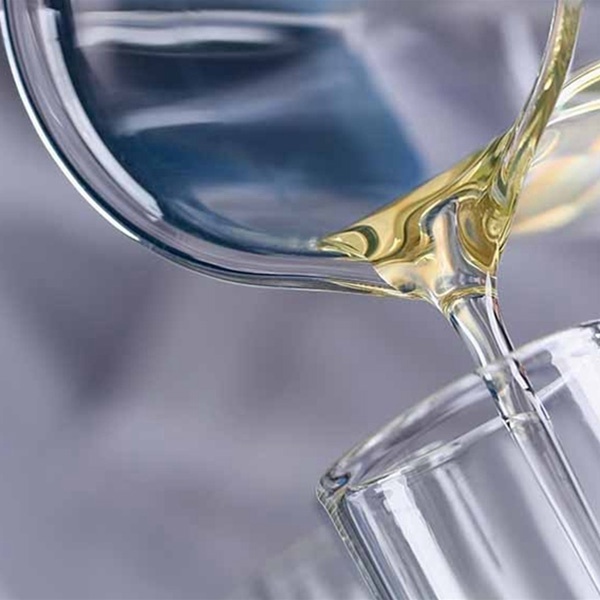
When engineering specifications demand ultimate durability, a two component pressure sensitive adhesive becomes mandatory. These formulas sacrifice operational simplicity to achieve structural resilience under harsh conditions.
A 2K system relies on an active chemical reaction. Operators add a curing agent or catalyst immediately before the coating process begins. Common curing agents include isocyanates and metal chelates. Once mixed, the catalyst attacks reactive sites on the base polymer. As the solvent evaporates inside the oven, the heat accelerates this reaction. The polymer chains bind together chemically. They form a dense, three-dimensional matrix. This resulting network cannot be melted or easily dissolved once fully cured.
This 3D network delivers incredible outcome improvements. It provides exceptional high-temperature cohesive strength. It resists plasticizer migration when applied to flexible PVC. The dense matrix also blocks aggressive chemicals from breaking the polymer bonds. Industries rely on these properties for survival. Automotive manufacturers use 2K adhesives to bond exterior trims that face UV rays, road salt, and engine heat. Aerospace engineers depend on them for bonding components inside pressurized cabins.
2K systems introduce strict operational constraints. Once you mix the two components, the viscosity immediately begins to rise. This creates a limited pot life. If you run the line too slowly, the adhesive can undergo premature gelation inside the fluid delivery system. This causes severe equipment fouling. Cured adhesive will destroy gear pumps and clog coating dies. Operators must strictly synchronize line speeds with the chemical reaction rate. Any sudden mechanical breakdown requires immediate flushing of the entire fluid delivery system.
Choosing between 1K and 2K systems requires a deep audit of your facility. You must align your existing infrastructure with the chemical demands of the adhesive.
Pumping and metering capabilities dictate your options. 1K systems tolerate basic direct-from-drum feeding. You can use standard diaphragm pumps. 2K systems demand automated precision mixing equipment. You must install static mixers and ratio-control gear pumps to ensure exact catalyst ratios.
Oven dynamics also play a massive role. 1K formulas only require solvent evaporation. You just need enough heat to drive off the carrier liquid. 2K formulas require evaporation plus thermal activation. The oven must supply sufficient thermal energy to trigger and complete the crosslinking reaction. If your oven zones are too short, the tape will roll up uncured.
Evaluation Metric | 1K Systems | 2K Systems |
|---|---|---|
Equipment Needs | Basic pumping, direct feed | Precision metering, static mixers |
Pot Life Constraints | None (Infinite) | Strict (Typically 4 to 8 hours) |
Oven Requirements | Evaporation only | Evaporation + Thermal Curing |
Cleanup Difficulty | Low (Easy to purge) | High (Risk of permanent gelation) |
Engineers must map final specifications to the chosen formulation. Shear Adhesion Failure Temperature (SAFT) serves as a primary metric. If your specification requires a SAFT above 150°C, a 2K system is structurally mandatory. If the specification lists a SAFT of 80°C, a modern 1K acrylic is more than "good enough." Do not over-engineer the bond. Over-engineering forces your facility to handle 2K complexities for no practical field benefit.
Moving beyond raw material pricing reveals the true impact of your formulation choice. You must evaluate the logistical burdens and safety protocols required on the production floor.
Facilities often underestimate the secondary costs tied to 2K manufacturing. You must account for hazardous waste disposal. When a 2K batch expires in the pot, it becomes cured scrap. This scrap often requires specialized disposal methods. Increased cleanup downtime heavily impacts profitability. Operators spend valuable shift hours purging lines. You must also account for the capital expenditure needed for specialized mixing equipment. These hidden factors make 2K systems significantly more expensive to run day-to-day.
Both systems rely on solvents, meaning they emit Volatile Organic Compounds (VOCs). Your facility must utilize thermal oxidizers to capture these emissions. However, 2K systems introduce additional safety hurdles. Specific catalysts, particularly isocyanates, pose severe respiratory hazards. Your facility must implement stringent worker safety protocols. This includes upgraded ventilation, personal protective equipment (PPE), and continuous exposure monitoring.
Storage conditions vary drastically between the two. 1K systems generally feature long, stable shelf lives. 2K systems require careful inventory management. The crosslinkers are highly moisture-sensitive. If you store 2K catalysts in humid environments without proper sealing, they react with moisture in the air. This renders them useless before they even reach the coating line. You must maintain climate-controlled storage for sensitive curing agents.
Transitioning from theory to production requires a structured approach. Use these steps to guide your internal teams through the selection process.
Follow this numbered filtering framework to establish a baseline decision:
End-Use Temperature: Does the product face sustained heat above 120°C? If yes, default to 2K.
Chemical Exposure: Will the adhesive contact aggressive solvents or fuels? If yes, default to 2K.
Substrate Type: Are you bonding to highly plasticized vinyl? If yes, select 2K to block plasticizer migration.
Infrastructure Limits: Do you lack automated mixing pumps? If yes, restrict your selection to advanced 1K systems.
Never move directly to full-scale production. Implement a phased pilot testing approach. Begin with lab-scale drawdowns. This allows your quality team to test baseline tack and peel properties. Next, conduct short pilot-runs on a narrow web coater. Use this pilot run to test real-world pot-life realities. Monitor how quickly the viscosity increases. Measure the exact oven temperature required to reach full cure.
Treat your adhesive formulator as a technical partner. Procurement and engineering teams must share specific facility constraints upfront. Provide your exact oven lengths, maximum line speeds, and typical ambient humidity levels. Share your pump specifications. By providing this physical manufacturing data, the formulator can adjust the solvent blend and catalyst speed. This ensures the chemistry actually fits your specific factory environment.
Selecting the right adhesive formulation dictates both factory efficiency and end-user satisfaction. 1K systems champion speed, simplicity, and ease of use. They eliminate pot-life worries and reduce scrap waste. Conversely, 2K systems act as the necessary solution for extreme physical demands. They offer unbeatable shear strength and chemical resistance at the cost of operational complexity.
Before making a final choice, audit your current capabilities. Review your oven zones, pumping gear, and safety protocols. Scrutinize the precise warranties your end-user expects. Never default to a higher-performing 2K system unless the field application strictly demands it. Optimize your production floor by choosing the simplest chemistry that confidently meets your performance thresholds.
A: Standard 1K systems cannot match 2K shear strength. However, advanced UV-curable 1K options or heavily pre-crosslinked solvent systems bridge this gap. They deliver excellent heat resistance without factory mixing. Even so, a true 2K matrix generally remains the absolute ceiling for extreme temperature survivability.
A: Improper ratios ruin the adhesive film. Not adding enough catalyst leaves unreacted monomers, resulting in low cohesive strength and sticky residue. Adding too much catalyst leads to over-crosslinking. This makes the adhesive overly rigid, causing a total loss of surface tack and peel adhesion.
A: High ambient humidity causes moisture entrapment or "blushing" during solvent evaporation. This weakens the film. Furthermore, moisture actively interferes with certain 2K crosslinking agents like isocyanates. The catalyst reacts with ambient water instead of the polymer, leading to incomplete curing and bond failure.
A: Yes. You can control the temperature of the mixing vessel, as chilling the liquid slows the reaction rate. Alternatively, you can work with formulators to select delayed-action catalysts. These specific curing agents remain dormant in the pot and only activate when exposed to high oven heat.


