Views: 0 Author: Site Editor Publish Time: 2026-07-28 Origin: Site


The modern textile industry is caught between two non-negotiable demands. You must meet stringent performance standards for wash and rub fastness. At the same time, tightening environmental compliance reshapes manufacturing worldwide. Organizations like ZDHC and Oeko-Tex continuously raise the bar for sustainability and chemical safety. Historically, achieving high durability meant relying on externally crosslinked systems. These two-component setups delivered tough finishes but often sacrificed worker safety. They also slowed down production efficiency due to highly complex preparation steps. Advances in polymer chemistry have changed this dynamic entirely. One-component alternatives are now highly viable for large-scale operations. This guide breaks down how to evaluate these chemical upgrades effectively. You will learn whether switching to a self-crosslinking system aligns with your specific production line. We explore technical requirements, safety benefits, and long-term operational efficiency. By understanding these underlying mechanisms, you can modernize your textile finishing process confidently.
Operational Efficiency: Self-crosslinking emulsions eliminate "pot-life" constraints and reduce chemical waste inherent in mixed 2K systems.
Compliance & Safety: External crosslinkers often rely on formaldehydes, aziridines, or isocyanates, posing regulatory risks; self-crosslinking systems typically offer a safer, eco-friendly profile.
Performance Trade-offs: While self-crosslinking systems meet standard to high performance needs, externally crosslinked acrylic emulsions may still be required for extreme industrial-wash durability.
Textile binders and coatings must survive severe mechanical stress. They face continuous washing cycles and harsh chemical exposure during their lifecycle. You must achieve this incredible durability without compromising the fabric's softness. Consumers demand a pleasant hand feel alongside robust garment performance.
Traditional two-component (2K) systems create massive bottlenecks on the factory floor. Mixing external crosslinking agents inherently introduces human error. Operators must measure exact ratios to ensure a successful reaction. These mixtures demand immediate use because they have a very short pot life. If a machine breaks down, the mixed batch often ruins itself. Furthermore, these chemical agents often generate hazardous volatile organic compounds (VOCs). Workers face daily exposure to these toxic agents during routine applications.
Procurement and technical teams face a complex evaluation matrix. You must balance extreme chemical resistance against vital production agility. Worker safety requirements now dominate facility audits and regulatory checks. Final product certification goals drive purchasing decisions at every level. A reliable textile acrylic emulsion must address all these factors simultaneously. When you evaluate chemical finishes, you must look beyond mere adhesion. You need systems that protect your workforce while delivering premium fabric quality. The industry can no longer tolerate hazardous chemicals for the sake of simple durability.
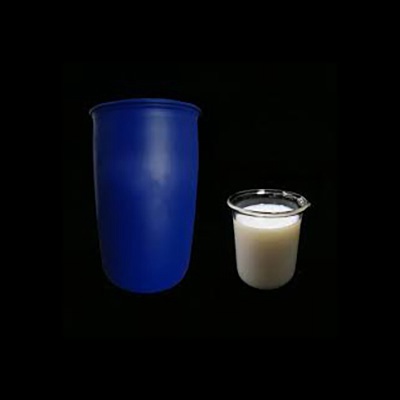
Understanding the chemical mechanism requires looking at built-in functional groups. Advanced formulations use DAAM/ADH ketone-hydrazide systems. These internal groups react automatically as water evaporates during the drying phase. They form a resilient, interconnected polymer network without needing external catalysts. This represents a massive leap forward in textile chemistry. You eliminate the need for secondary reactive agents completely.
These mechanics deliver massive operational wins for your facility.
Infinite Pot Life: The mixture is ready to use right out of the drum. You avoid mid-shift viscosity spikes and wasted chemical batches. Production lines run smoothly without strict time limits.
Lower Curing Temperatures: A self-crosslinking acrylic emulsion achieves full crosslinking at much lower heat. This saves substantial thermal energy. It also heavily protects heat-sensitive synthetic fibers from thermal degradation.
Compliance Ready: These systems remain inherently low-VOC by design. They are completely free of formaldehyde-releasing agents. This directly supports your eco-label certifications and keeps your factory compliant.
By eliminating complex mixing errors, you streamline everyday operations. Operators no longer worry about timing their application batches perfectly. The factory floor becomes inherently safer and much more predictable. You also reduce the storage footprint since you only warehouse a single chemical component.
Traditional 2K systems rely on adding distinct chemical agents immediately before application. Manufacturers commonly use reactive melamines, aziridines, or polyisocyanates. These agents react aggressively with the base resin to form an ultra-dense polymer matrix. This density provides incredible resistance to harsh environmental elements. The resulting film is highly rigid and incredibly tough.
You should retain these systems for strict, non-negotiable applications:
Industrial workwear requiring extreme chemical and solvent resistance beyond normal wear.
Heavy-duty technical textiles demanding maximum mechanical film toughness for outdoor use.
Fabrics subjected to continuous, punishing industrial wash cycles in commercial laundries.
Specialty coatings where maximum structural rigidity is a core product requirement.
However, deploying a traditionally crosslinked acrylic emulsion brings hidden operational burdens. You must maintain incredibly strict mixing ratios to avoid coating failure. Mandatory safety PPE slows down your workforce and increases discomfort. The restricted pot life often limits production runs to just four to eight hours. Once that time expires, the chemical mixture becomes unusable sludge. Finally, you must meet strict storage condition requirements to prevent agent degradation. Moisture contamination can instantly ruin a batch of external crosslinker.
Choosing between these two distinct technologies requires analyzing your specific facility constraints. Curing energy often dictates which system you can realistically adopt. Self-crosslinking chemistry operates highly efficiently under standard textile stenter frame conditions. External systems usually require prolonged, high-heat baking to achieve a full cure. If your ovens cannot maintain high temperatures, 2K systems will fail.
Fastness metrics remain the ultimate deciding factor for quality control. You must carefully compare color fastness, dry rub resistance, and overall washability. Premium 1K systems now achieve 90-95% of the durability seen in traditional 2K setups. For most consumer garments, this slight difference remains entirely unnoticeable.
Hand feel and flexibility vary significantly between the two chemical approaches. External crosslinking often leads to a much stiffer fabric finish. This happens because of the significantly higher crosslink density within the polymer. Conversely, self-crosslinking variants offer highly tunable glass transition temperatures (Tg). This unique flexibility allows you to produce remarkably softer textiles.
Below is a comparison to clarify these functional differences.
Evaluation Metric | One-Component (1K) Systems | Two-Component (2K) Systems |
|---|---|---|
Curing Requirements | Standard stenter frame heat | Prolonged, high-heat baking |
Pot Life Flexibility | Infinite (pre-application) | Strictly limited to 4-8 hours |
Fabric Hand Feel | Highly tunable and exceptionally soft | Typically stiffer and more rigid |
Worker Safety | Low-VOC, highly eco-friendly | Requires strict safety PPE gear |
Application Complexity | Simple, straight from the drum | Requires precise manual mixing |
Transitioning to a new chemical formulation involves distinct compatibility risks. Self-crosslinking functional groups are often highly sensitive to sudden pH changes. You must carefully vet your existing thickeners, defoamers, and textile auxiliaries. An incompatible additive can disrupt the internal chemical reaction completely. We advise testing all existing auxiliary chemicals against the new emulsion.
Storage and stability require your immediate attention during a transition. These advanced emulsions demand strict temperature control during long-term warehousing. Extreme heat can trigger premature crosslinking inside the sealed container. This causes the emulsion to gel inside the drum before you even open it. You must ensure your warehouse avoids direct sunlight and extreme summer temperatures.
We strongly recommend following a phased pilot testing protocol. Start with simple lab-scale drawdown tests to evaluate the initial fabric hand feel. Next, run a limited pilot stenter test on a single machine. This verifies actual wash fastness under real factory conditions. Evaluate the finished fabric after multiple standard washing cycles. Only proceed to full line conversion once these strict tests succeed entirely.
For roughly 80% of consumer apparel and home textile applications, a 1K system proves superior. It offers the absolute optimal blend of sustainability, operational efficiency, and solid performance. You simplify your entire production line while easily meeting strict environmental standards. Modern consumers demand eco-friendly manufacturing, and this technology delivers exactly that.
You should only stay with 2K systems for highly niche applications. Reserve them strictly for heavy-duty technical textiles and aggressive industrial environments. Ultimate chemical resistance justifies the intense operational friction in these rare cases. For standard garments, the extra hassle simply offers diminishing returns.
Technical buyers should request detailed sample data sheets immediately. Review your current oven temperature profiles to ensure compatibility with 1K requirements. Conduct initial drawdown tests to evaluate the softness and basic adhesion. A careful, phased approach will ensure a smooth upgrade for your textile finishing operations.
A: No. Many modern systems utilize simple water-evaporation mechanisms. This allows excellent room-temperature film formation. However, a brief standard thermal curing cycle at 130-150°C accelerates the process heavily. This thermal boost ensures the fabric achieves maximum wash fastness and durability quickly.
A: Yes. These specific formulations typically bypass formaldehydes and isocyanates entirely. Because they lack these deeply hazardous chemicals, they are highly ideal for passing stringent eco-certifications. They easily meet modern global compliance standards for safe apparel manufacturing.
A: Externally crosslinked emulsions feature long shelf lives until mixed. Once combined, their pot life shrinks rapidly to mere hours. A 1K system is a convenient single pack. It offers a typical shelf life of 6-12 months if stored correctly away from extreme heat.
A: In some highly advanced formulations, yes. This creates a specialized hybrid system. However, you severely risk over-crosslinking the polymer structure. This leads to a brittle film and poor fabric hand feel. Always consult the manufacturer's technical data sheet before attempting to mix anything.


