Views: 0 Author: Site Editor Publish Time: 2026-07-15 Origin: Site


A label can stay in place through shipping yet become a problem when removal leaves residue, while an easy-peel label may fail before the product reaches the customer. That tension is why permanent and removable water based label adhesive systems cannot be judged by “stickiness” alone. Their tack, peel strength, shear resistance, substrate compatibility, and bond development must match the label’s intended life. Understanding how water-based adhesives for labelling and label adhesive coatings differ helps converters and product teams choose a bond that holds when needed and releases only when intended.
A permanent pressure-sensitive adhesive is expected to wet the substrate, increase real surface contact, and develop a dependable bond during dwell. That bond must resist edge lift, sliding, handling, and environmental exposure long enough to preserve identification or branding. Removal may tear the facestock or disturb the surface without indicating adhesive failure. Shipping labels, safety information, asset tags, and long-life product labels commonly need this behavior.
Immediate testing can be misleading because bond strength often develops after application. Permanent performance should be judged after the specified dwell period and after the conditions the label will face in use.
A removable formulation operates within a narrower window. It needs enough initial tack to lie flat and enough shear strength to stay in position, while peel adhesion must remain low enough for controlled removal at the intended date. Ideally, release occurs at the adhesive–substrate interface, allowing the coating to leave with the label rather than split and remain as residue. “Clean removal” should identify the surface, dwell period, temperature, and acceptable residue level.
The label must survive handling and storage without drifting toward premature release or excessive bond growth. Its specification should therefore set both the minimum hold during use and the maximum acceptable removal force at the end.
Reducing tack alone can cause flagging, movement, or premature detachment. If cohesion is too low, the coating may split internally even when peel force appears modest. Effective removable label adhesive coatings balance surface adhesion with the internal strength of the adhesive film. Repositionable labels solve a different problem: they allow placement correction shortly after application, whereas removable labels must release after a specified service period.
Decision point | Permanent adhesive | Removable adhesive |
Bond development | Builds and stabilizes | Remains within a removal range |
Main priority | Long-term attachment | Secure hold, then clean release |
Intended failure | Facestock or surface may be affected | Release at the adhesive–surface interface |
Main risk | Premature lifting | Residue, ghosting, or surface damage |
Tack indicates how quickly an adhesive grabs during application. Peel adhesion measures the force needed to remove the label at a stated angle, speed, substrate, and dwell time. Shear resistance reflects the coating’s ability to hold position under sustained load and is closely related to internal cohesion. These are linked but distinct properties, and improving one can sometimes reduce performance in another.
Permanent label adhesive coatings generally emphasize durable peel development and resistance to movement. Removable systems still require tack and shear, but peel growth must be controlled so the label does not lock onto the substrate. No single number proves suitability because two coatings with similar peel values may differ sharply in initial grab, creep, residue, or response to ageing. The performance target must be written as a combination of properties rather than a headline strength.
Standardized self-adhesive label tests measure peel, shear, loop tack, adhesive coat weight, low-temperature adhesion, ageing, UV resistance, chemical exposure, and wash-off behavior separately. This separation allows converters to compare candidates under repeatable conditions without treating one measurement as a complete bond profile.
Polymer mobility affects how readily a water based label adhesive flows into microscopic surface irregularities. More wet-out can improve contact and peel, but excessive flow may allow a removable bond to strengthen beyond its target. Crosslinking can increase cohesion by restricting polymer movement, although too much may reduce tack and peel. Coat weight adds another lever: a heavier coat can bridge roughness, yet may also increase drying demand, edge ooze, peel strength, and residue risk.
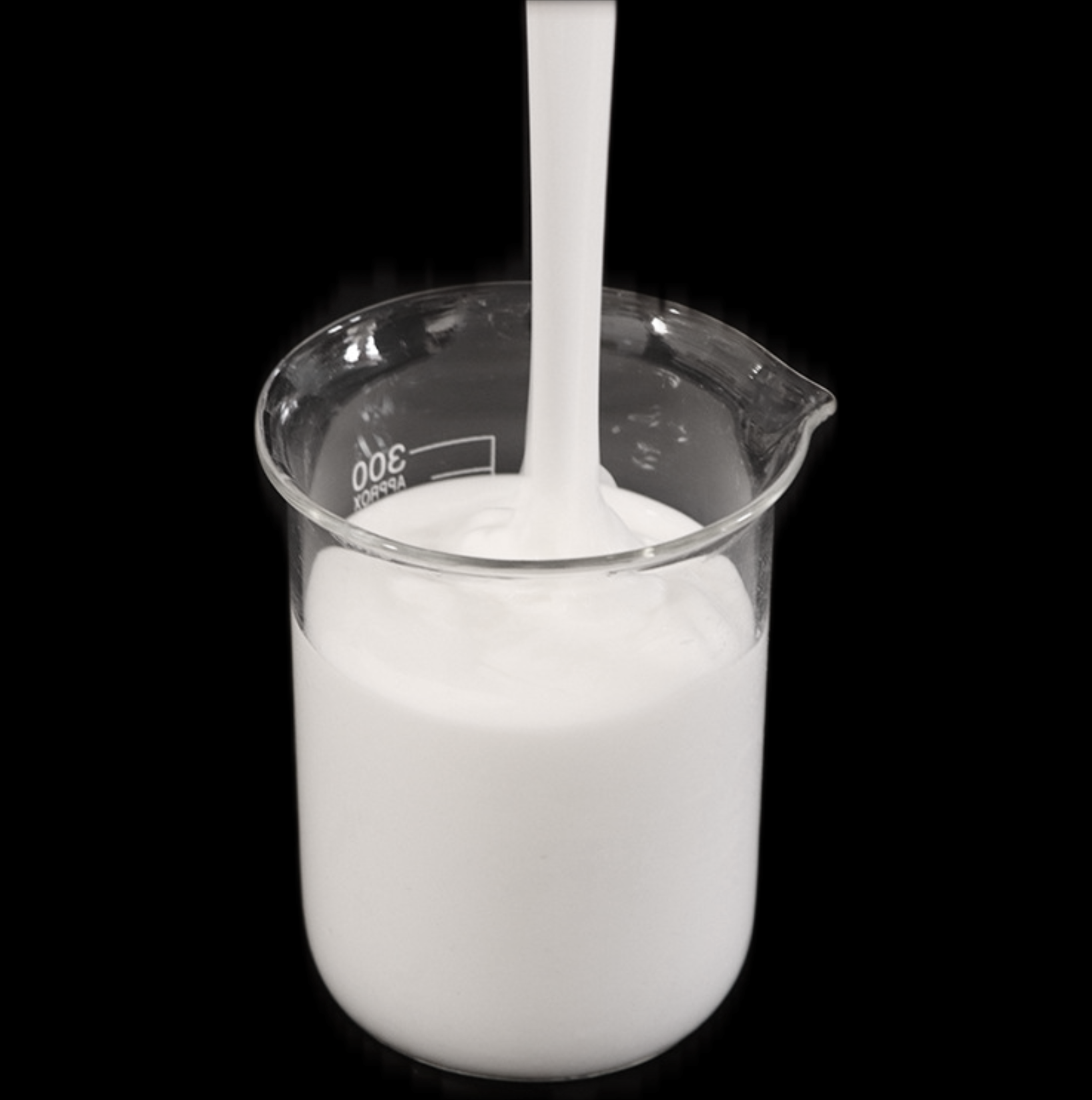
Solids content and viscosity influence metering, coating consistency, drying, and transfer, but neither independently defines permanent or removable behavior. TAILAI TL-907, for example, has 54% ±1% solids, 10,500 cP viscosity at 25°C, 13 N at 180° peel, 20# ball tack, and a pH of 7.5–8.5. Those values are useful only when the test substrate, facestock, dry coat weight, sample width, dwell time, and method are also known.
The same water based label adhesive can behave differently on smooth glass, clean metal, textured board, curved containers, or low-surface-energy plastic. Smooth, higher-energy surfaces usually allow broader contact, while roughness reduces effective contact and tight curves add stress at the label edge. A coating may appear permanent on one substrate and weak on another because the interface has changed.
Dust, oil, release agents, frost, and condensation create boundary layers that keep the coating away from the intended material. Increasing tack may hide the problem briefly without correcting it. Before changing the formulation, confirm that test samples reproduce the real surface condition, temperature, texture, geometry, and application pressure.
Removal belongs to the whole laminate rather than the adhesive alone. A weak paper facestock may tear before the coating releases, leaving fragments even when adhesive residue is limited. A stronger film can distribute peel force more evenly and may carry the coating away in one piece. Liner release and dry-coat consistency also affect transfer, dispensing, and repeatability.
TAILAI water-based adhesive solutions can be used in label constructions involving paper, film, foil, and release-liner components. Material compatibility alone does not guarantee the required performance. The actual facestock, liner, coating weight, substrate, print system, and converting conditions must be evaluated together.
Application temperature determines whether the coating can wet the surface when pressure is applied. Service temperature affects how the bond holds, creeps, ages, and eventually releases. A removable label should therefore be checked immediately, after early dwell, after environmental conditioning, and at the planned removal date.
Refrigeration, freezing, heat cycling, moisture, UV exposure, cleaning chemicals, and migrating surface additives can move performance outside the intended window. Cold application may limit initial wet-out, while heat can soften the adhesive and weaken shear resistance. Extended dwell may also increase contact until a removable coating becomes harder to peel than expected.
The relevant question is whether the complete label remains inside its tack, peel, shear, appearance, and removal limits after the exact exposures it will face. Low-temperature adhesion, accelerated ageing, UV resistance, chemical resistance, surface tension, and wash-off behavior require separate evaluation because no single test covers the complete lifecycle.
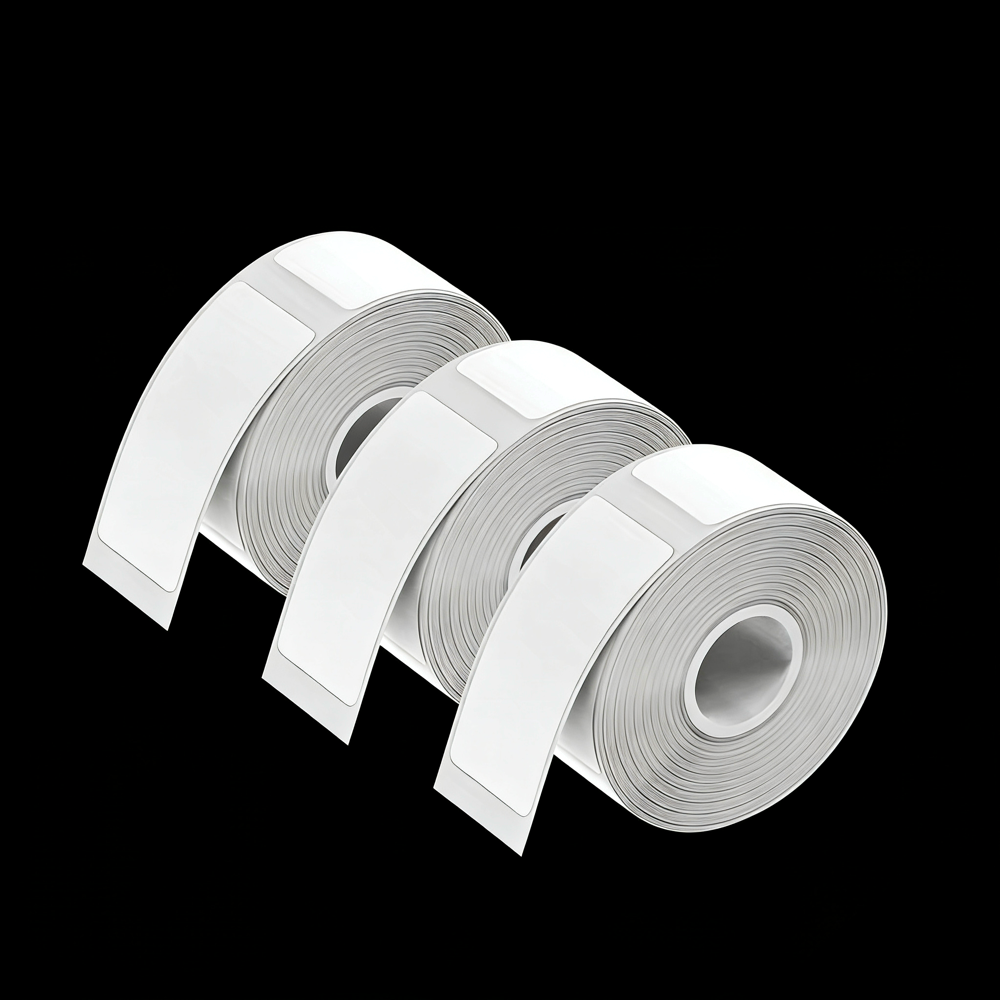
Begin with the label’s endpoint rather than a catalogue grade. Decide how long it must remain, who will remove it, and what the exposed surface should look like afterward. Minor residue may be acceptable on a transit tote but unacceptable on glassware, appliances, or premium packaging. Two water-based adhesives for labelling in the same industry may need opposite bond profiles because their end-of-life requirements differ.
A removable specification should include a deadline, such as clean removal after 90 days from a stated surface and temperature. A permanent specification should state the minimum hold after dwell and relevant exposure. Terms such as “easy peel” or “strong” are too vague for qualification.
Permanent adhesive is appropriate when a missing label creates the greater operational, safety, or brand risk. Logistics identification, primary branding, warning information, equipment labels, and frequently handled products are common examples. Define the substrate, application temperature, service range, handling frequency, expected life, and exposure to water or chemicals.
Requesting the strongest available water based label adhesive without those details can create an unnecessarily aggressive construction. Water-based adhesive formulations can serve packaging, logistics, consumer goods, daily chemical products, and industrial identification, but tack, peel strength, and coating performance still need to match the individual application.
Removable adhesive suits temporary labels when the underlying product, container, or finish retains value. Price stickers, promotions, inspection marks, reusable containers, and labels on finished goods fit this requirement. Acceptance criteria should cover residue, staining, ghost outlines, fragments, scratches, varnish lift, and other visible changes.
A low initial peel result is not sufficient. The coating must also resist sliding, edge lift, transfer, and cohesive splitting until removal. Longer dwell and harsher exposure require tighter qualification of label adhesive coatings. Tack, peel strength, moisture resistance, and chemical resistance may need to be adjusted to reach the intended performance window.
Build samples with the actual facestock, dry coat weight, liner, substrate, application pressure, and conditioning procedure. Test immediately, after 24 to 72 hours, after relevant exposure, and at the intended removal date. Measure tack, peel, and shear where numeric criteria are needed, then inspect edge lift, residue, tearing, staining, and surface damage.
Test stage | Permanent label should… | Removable label should… |
Initial application | Attach without flagging | Hold without excessive grab |
After dwell | Reach minimum peel | Stay within the removal range |
After exposure | Resist lifting and sliding | Remain attached and release cleanly |
End of service life | Remain functional | Leave no unacceptable residue or damage |
Standardized test frameworks cover peel, shear, loop tack, coat weight, ageing, low-temperature adhesion, UV exposure, chemical resistance, and wash-off. Use the same procedure for every candidate and set pass limits before reviewing results. Technical data can screen options, but final approval must confirm coating, drying, release, die-cutting, dispensing, service hold, and removal.
Choosing between permanent and removable water based label adhesive depends on the bond lifecycle, not simply the highest peel strength. Substrate, facestock, coat weight, dwell time, temperature, and removal expectations should be tested together so the label stays secure without creating avoidable residue or surface damage.
CHUZHOU TAILAI IMPORT&EXPORT TRADING CO.,LTD. supplies water-based acrylic pressure-sensitive adhesives for label and sticker production, with options suited to different tack, peel, and coating requirements. Matching these label adhesive coatings to real application conditions can reduce relabeling, improve converting consistency, and support more reliable product performance.
A: Permanent adhesives develop stronger long-term bonds and may damage the label or surface during removal. Removable adhesives hold temporarily and are designed to release with minimal residue.
A: Water is the carrier used during coating and drying. Permanent or removable behavior comes mainly from polymer design, cohesion, tack, coat weight, and substrate interaction.
A: Yes. Dwell time, heat, UV exposure, plasticizer migration, and surface chemistry can increase bond strength. Removal performance should be tested at the intended end-use date.
A: Low-surface-energy plastics, rough materials, dusty containers, cold surfaces, and items with condensation can reduce wet-out. Each label construction should be tested on the actual substrate.
A: Evaluate initial tack, peel adhesion after defined dwell periods, shear resistance, edge lift, residue, and surface damage under realistic application temperatures and service conditions.


