Views: 0 Author: Site Editor Publish Time: 2026-07-28 Origin: Site


Improper tape selection quietly drains your packaging budget and damages your brand reputation. When boxes fail during transit, you immediately face compromised product security. You experience increased pilferage rates. You also suffer from elevated packaging costs due to constant rework. Finding a reliable, long-lasting seal matters immensely in modern logistics.
BOPP (Biaxially Oriented Polypropylene) film serves as the undisputed industry standard for securing shipments. It delivers exceptional physical durability. It also provides unmatched cost-efficiency for high-volume operations. However, simply grabbing the cheapest roll off the shelf often leads to disastrous warehouse failures. We wrote this guide to solve that exact problem.
This article provides a clear technical framework for evaluating and selecting the precise BOPP packing tape configuration for your facility. We will explore how your specific load weight, corrugate quality, and operating environment dictate your tape choice. You will learn exactly how to align your packaging needs with the right film and adhesive pairing.
BOPP tape performance relies on two distinct variables: the film thickness and the adhesive chemistry.
Carton weight and corrugate quality dictate the required tape thickness (measured in mils or microns).
Environmental conditions (temperature, humidity) and application methods (manual vs. automated) determine the optimal adhesive type.
Procurement should evaluate the "cost-per-secure-seal" rather than the raw cost-per-roll to account for rework and material failure.
Manufacturers favor BOPP film for several highly technical reasons. The manufacturing process stretches the polypropylene film in two distinct directions. We call this machine direction and transverse direction stretching. This biaxial orientation gives the film immense tensile strength. The tape strongly resists elongation when pulled. It will not stretch out of shape under a heavy load. Furthermore, BOPP acts as a powerful moisture barrier. It repels water and high humidity. This keeps your packages safe during unexpected rain or damp warehouse storage.
Many procurement teams make a common mistake. They assume the term "BOPP" describes the entire product. This is incorrect. BOPP only refers to the plastic backing material. The actual performance of all carton sealing tapes depends on a broader matrix. You must pair this tough BOPP backing with the correct adhesive system. A premium backing coated in the wrong adhesive will still fail. The film carries the load, but the adhesive secures the grip.
You must establish strict criteria to evaluate seal success. A successful seal provides immediate shear strength upon application. It grabs the cardboard instantly. It also maintains long-term holding power over weeks or months. Most importantly, a successful tape accomplishes this using only a single strip over the box seam. If your team needs multiple strips to feel confident, your current tape is failing your success criteria.
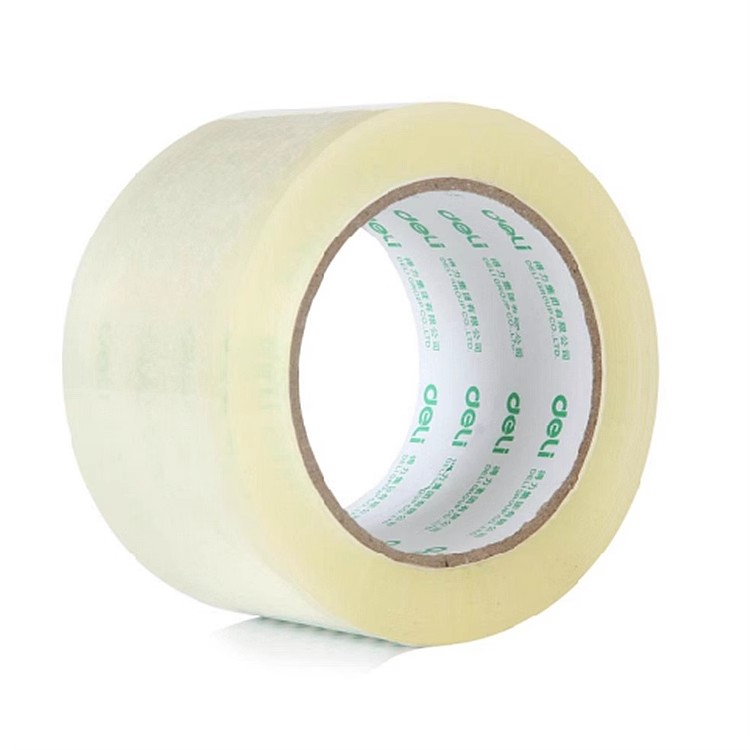
You must carefully match your adhesive chemistry to your operating environment. We categorize adhesives into three primary technologies.
Adhesive Type | Primary Strengths | Ideal Environment | Limitations |
|---|---|---|---|
Acrylic | UV resistance, longevity | Cold storage, long transit | Slower initial grab |
Hot Melt | Instant grab, automated speeds | Standard room temperature | Fails in extreme temperatures |
Natural Rubber | Aggressive bond, versatile | Dusty or challenging surfaces | Higher price point |
Acrylic adhesives utilize water-based or solvent-based chemistries. They are best for long-term storage and extreme temperature fluctuations. You should use them if packages face direct UV exposure. Acrylic tape features a slower initial tack. It does not grab aggressively the exact second it touches the box. Instead, it builds stronger adhesion over time. It forms a permanent bond after several hours. Unlike other adhesives, acrylic does not yellow or degrade under sunlight.
Best Practices: Apply firm pressure to activate the adhesive.
Common Mistakes: Using acrylic on fast-moving automated lines where instant hold is mandatory.
Hot melt formulations use synthetic rubber polymers. They are best for high-volume shipping environments. If you run automated carton sealers, hot melt is usually your optimal choice. They excel in standard room temperatures. Hot melt provides exceptional initial grab. When applied to highly recycled corrugate, a properly formulated high tack adhesive tape offers superior holding power. However, hot melt has strict limits. It can turn brittle and fail in extreme cold. It can soften and release in extreme heat.
Natural rubber adhesives are the heavyweights of the packaging world. They are best for highly problematic surfaces. If your warehouse generates immense dust, natural rubber cuts through it. We recommend it for extreme heavy-duty export applications. It boasts the broadest temperature operating range. It creates an aggressive bond on almost any surface imaginable. The primary drawback is its higher price point. You should reserve it for specific high-risk shipments.
Your box weight strictly dictates your required film thickness. We measure this thickness in mils (thousandths of an inch) or microns. Selecting the wrong thickness guarantees packaging failure.
You should assign light-duty tapes to packages weighing under 15 pounds. These thinner films handle basic containment tasks.
Use them for standard retail distribution.
Apply them to lightweight e-commerce goods.
Deploy them for sealing polymailers or inner cartons.
Do not waste money using heavy tape on light boxes. A 1.6 mil tape provides plenty of tensile strength for basic apparel or small electronics.
You will use medium-duty tapes for the vast majority of your shipping needs. They support packages weighing between 15 pounds and 40 pounds. We consider this the sweet spot for standard B2B shipping. Consumer packaged goods (CPG) rely heavily on 2.0 mil tapes. This thickness absorbs moderate transit shocks. It withstands conveyor belt friction without tearing. If you lack a standardized packaging audit, starting with a 2.0 mil tape offers a safe baseline.
Heavy-duty packages demand maximum structural integrity. You must use thicker tapes for packages exceeding 40 pounds. Overstuffed cartons create constant outward pressure on the flaps. A 3.0 mil tape resists this bursting force. Use these tapes for heavy industrial parts. They protect dense machinery components. We also mandate heavy-duty tapes for international export shipping. Export boxes face rough handling, multiple transfer points, and prolonged ocean transit.
Your application method dramatically shifts your tape requirements. Machine rolls and hand rolls are not interchangeable.
Automated case sealers process dozens of boxes per minute. Machine rolls require specific chemical release coatings. This coating allows rapid, continuous unwind from the core. We generally pair machine rolls with hot melt adhesives. Hot melt handles the high speed of automated wipe-down mechanisms perfectly.
Manual application presents different challenges. Workers use handheld tape guns. Manual application often benefits from acrylic adhesives. Acrylic requires less force to unwind from the roll. Workers experience less wrist fatigue. You can also source specific hot melt blends formulated for reduced noise in crowded packing areas.
Modern sustainability efforts changed box chemistry. Highly recycled boxes consist of shorter paper fibers. The recycling process also leaves more dust on the cardboard surface. This makes it incredibly difficult for standard adhesives to penetrate the box fibers. The tape simply sticks to the surface dust and peels off later.
You must address this chemically. We recommend selecting tapes explicitly designed for 100% recycled cartons. These formulas flow deeper into the short fibers. They grab the actual corrugate structure instead of the surface debris.
You must clearly identify the difference between application temperature and service temperature.
Application Temperature: The climate of your facility at the exact moment you apply the tape.
Service Temperature: The climate the box experiences during prolonged transit and storage.
Applying tape in a 35-degree freezer requires a specialized cold-room adhesive. Applying tape in a 70-degree warehouse and shipping it to a freezing climate requires an acrylic tape. You must map the entire thermal journey of your packages before finalizing your selection.
Flagging remains the most common visual indicator of tape failure. You will notice the edges of the tape peeling up away from the box. This usually stems from three distinct root causes. First, your operators might apply insufficient wipe-down pressure. The adhesive never fully wets out into the fibers. Second, excessive dust on the carton blocks the bond. Third, you may have selected a tape with inadequate shear strength. Box flaps possess "memory." They naturally want to spring open. If the box memory is stronger than the tape's shear strength, the edges will flag.
When tape breaks cleanly across the seam, you face a mechanical failure. This often indicates the mil thickness is simply too low for the heavy carton weight. The film reached its maximum elongation point and snapped. Alternatively, your equipment may cause this. If the tape tension on the machine dispenser is set incorrectly, it stretches the film prematurely. Check your dispenser rollers and blade mechanisms regularly.
Walk onto any warehouse floor, and you might see the "H-tape" method or the three-strip method used unnecessarily. Workers inherently distrust cheap tape. When a thin tape feels weak, they apply three strips over the center seam instead of one. This practice destroys your budget. It results in exponentially higher actual labor time per box. It also triples your material costs. Purchasing a correctly specified, slightly thicker tape stops this behavior immediately. One strong strip always costs less than three weak strips.
Do not base your purchasing decisions on marketing claims. You must request Technical Data Sheets (TDS) from your potential suppliers. Compare three critical metrics side-by-side.
Adhesion to Steel: Measured in ounces per inch (oz/in). This dictates the immediate grabbing power.
Tensile Strength: Measured in pounds per inch (lbs/in). This defines how much force the backing handles before breaking.
Elongation at Break: Measured as a percentage. This shows how far the tape stretches before it fails.
Paper metrics only tell half the story. You must conduct aggressive operational testing in your own facility. Seal your actual boxes. Perform drop tests from varying heights. Conduct transit simulations by shipping test boxes across your most rigorous routes. Furthermore, observe sealed cartons stored in actual warehouse conditions for 48 hours. Delayed flagging often takes a full day to manifest. If the tape holds tight after two days, it will likely survive the entire supply chain.
Procurement teams often fixate on the unit price per roll. This metric deceives buyers. A cheap roll that requires multiple strips costs you more. You must measure the precise "cost per 1,000 sealed cartons." When you evaluate the total expense, you must factor in the hidden costs of cheap tape. Calculate the labor time lost to applying extra strips. Add the cost of rejected shipments due to open flaps. Add the cost of stolen goods. A premium tape drastically reduces these secondary expenses.
Selecting the right BOPP film and adhesive combination is a strategic operational decision. It is never a simple commodity purchase. Proper tape selection protects your product, accelerates your packing lines, and eliminates wasteful over-taping.
Before you engage suppliers for new samples, take actionable steps on your floor. Audit your current carton weights carefully. Document the specific corrugate types you purchase. Map the temperature profiles of your facility and your shipping routes. Armed with this accurate data, you can confidently specify a tape that secures your shipments on the first pass, every single time.
A: Both measure the thickness of the tape, including the backing and adhesive. "Mil" is an imperial measurement equaling one-thousandth of an inch. "Micron" is a metric measurement. One mil equals exactly 25.4 microns. Most North American suppliers use mils, while international manufacturers specify microns. Always clarify which unit your supplier is quoting.
A: Standard BOPP film is plastic and is not inherently recyclable with paper. During the pulping process at recycling facilities, screens filter out the plastic tape waste. While the box itself gets recycled, the tape goes to a landfill. If strict recyclability is required, consider water-activated paper tapes instead.
A: Most reputable tapes offer a functional shelf life of 12 months from the date of manufacture. You must store them in a climate-controlled environment, typically between 60°F and 80°F, away from direct sunlight. Extreme heat or freezing temperatures degrade the adhesive prematurely while in storage.
A: This happens when the tape's shear strength cannot overcome the structural memory of the corrugated box. Overstuffed boxes constantly push outward against the flaps. If the adhesive cannot hold that sustained pressure, it releases. You likely need a thicker film or an adhesive formulated for heavier weights.


