Views: 0 Author: Site Editor Publish Time: 2026-07-27 Origin: Site


Manufacturers face a difficult balancing act today. You must achieve precise coating weights and distinct fabric hand-feel. You also need robust durability across your product lines. Doing this without driving up energy costs feels nearly impossible. Traditional liquid coatings rely heavily on water. Drying this excess water consumes massive thermal energy. It significantly slows down production lines. Enter crush foam coating. This high-efficiency alternative replaces excess liquid water with air. It fundamentally changes how we apply polymer systems to fabrics and papers.
However, mechanical equipment tells only half the story. The underlying chemical baseline actually drives the results. Your polymer choice dictates final product performance. It impacts foam stability, wash resistance, and overall market viability. In this guide, we explore the core mechanics behind this innovative process. We examine why specific polymer chemistries outperform traditional options. You will also learn to troubleshoot common formulation risks. This knowledge ensures flawless, continuous production runs.
Crush foam coating reduces water usage and energy consumption by applying air-diluted polymer systems before mechanically compressing them into a continuous film.
The choice of a crush foam coating emulsion directly dictates the flexibility, wash-resistance, and aesthetic finish of the final substrate.
Acrylic emulsions offer a superior balance of UV stability, tunable Tg (glass transition temperature), and mechanical durability compared to SBR or standard acetates.
Successful implementation requires balancing foam density, crosslinking dynamics, and calendar roll pressure to prevent strike-through and ensure complete coalescence.
Understanding the crush foam process requires looking at the entire production sequence. We replace large volumes of water with mechanically introduced air. This creates a highly stable foam structure. Operators then apply this foam onto a substrate. Finally, mechanical pressure collapses the foam into a solid, continuous layer. This workflow drastically changes standard coating dynamics.
The standard process flow typically follows these four distinct stages:
Mechanical Aeration: Industrial foaming machines mix the polymer emulsion with specific volumes of air. This generates a dense, shaving-cream-like micro-foam.
Precise Application: Equipment applies this foam onto the fabric or paper web. Most facilities use a knife-over-roll or rotary screen setup for exact thickness control.
Drying and Curing: The web enters an oven. Because the foam contains significantly less water than liquid baths, you evaporate moisture much faster.
Crushing (Calendering): The dried, expanded foam passes through heavy calendar rolls. The pressure crushes the air pockets, forcing the polymer particles to merge into a continuous film.
The operational advantages remain highly attractive. Foaming increases the physical volume of the binder. This allows you to control penetration depth precisely. You keep the polymer strictly on the fabric surface if desired. Furthermore, reducing water content slashes the thermal energy required for drying. You run ovens at lower temperatures or increase line speeds.
You can define a successful application through clear visual and physical criteria. We look for uniform film formation across the entire web. The crushed coating must show an absolute absence of pinholes. It must also achieve your target breathability or barrier properties consistently.
Your mechanical setup demands a robust chemical foundation. You cannot build a durable crush foaming coating without baseline foam stability. We measure this stability using foam half-life. Uniform bubble size remains a non-negotiable metric. If bubbles vary wildly in size, the coating collapses unevenly during the drying phase. This creates weak spots and visual defects.
Manufacturers typically evaluate three primary binder chemistries. Each option presents distinct advantages and limitations regarding continuous web applications.
Binder Chemistry | Primary Advantages | Key Limitations | Best Use Case |
|---|---|---|---|
Styrene-Butadiene Rubber (SBR) | Highly cost-effective; excellent initial binding strength. | Prone to yellowing over time; creates a stiffer hand-feel. | Carpet backing, low-cost indoor upholstery. |
Polyurethanes (PU) | Exceptional flexibility; superior mechanical toughness. | Often cost-prohibitive for large-scale continuous runs. | High-end technical textiles, medical barriers. |
Acrylic Emulsions | Excellent UV stability; highly tunable properties; pragmatic cost. | Requires precise surfactant balancing for ideal foaming. | Outdoor textiles, blackout curtains, apparel. |
Styrene-Butadiene Rubber (SBR) remains cost-effective. However, it lacks long-term aesthetic stability. It degrades and yellows when exposed to UV light. Polyurethanes deliver incredible performance but break production budgets quickly. Acrylic emulsions represent the ideal pragmatic middle ground. They offer excellent oxidation resistance and superior color retention.
We map these chemical properties directly to commercial outcomes. For instance, acrylic polymers resist degradation from sunlight. This makes them perfectly suited for outdoor awnings or blackout curtains. Their stable polymer backbone ensures the coating extends the product lifespan significantly. You avoid the premature cracking often seen in cheaper SBR alternatives.
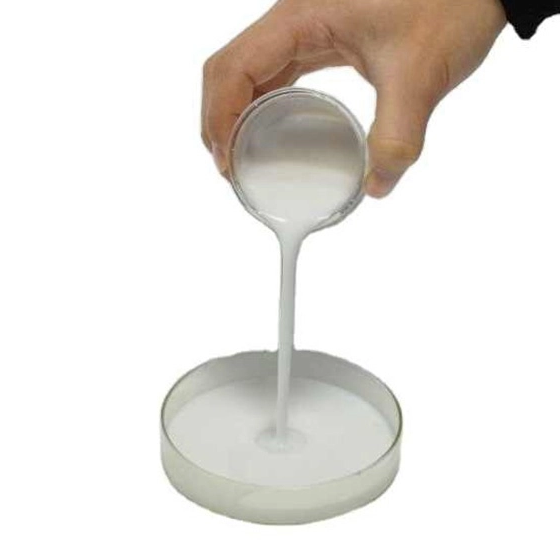
The correct emulsion for crush foam coating heavily influences final substrate properties. Glass transition temperature (Tg) plays a leading role here. Tg defines the temperature at which a polymer transitions from a hard, glassy state into a soft, rubbery one. Formulators manipulate this value to match specific end-use requirements.
Controlling the Tg determines your product's tactile experience. A low-Tg acrylic yields a soft, highly drapable fabric. We use these for apparel or luxury interior drapery. Conversely, formulating a high-Tg acrylic creates a rigid, protective finish. Manufacturers rely on high-Tg options for stiff technical textiles or structural wall coverings. You can blend polymers to pinpoint the exact hand-feel your customers demand.
Film coalescence dictates overall tensile strength. During the crushing phase, mechanical calendar pressure forces the acrylic particles together. They deform and entangle. This creates a continuous, durable matrix. If the acrylic does not coalesce properly, the film remains weak. It will crack under stress. Selecting an acrylic designed specifically for mechanical yielding ensures maximum tensile strength after calendering.
Wash and dry-clean resistance also depend on polymer chemistry. Industrial laundering involves harsh alkalis and high temperatures. Dry cleaning uses aggressive solvents. Self-crosslinking acrylic emulsions excel in these environments. During the curing phase, internal crosslinkers form strong covalent bonds across the polymer chains. These chemical bridges prevent the coating from swelling or degrading under chemical exposure.
Achieving a flawless run requires mastering several formulation variables. Your crush foam coating emulsion needs optimal rheology for foam generation. We must carefully balance solids content and viscosity.
Most commercial operations target a solids content between 45% and 60%. High solids content drastically reduces drying time. Less water means less evaporation work for your ovens. However, higher solids can complicate foam generation. Thick systems require robust mechanical shear to aerate properly. You must balance the base viscosity using precise surfactant systems. A lower-viscosity fluid foams easier but may drain prematurely before drying.
Surfactant and additive compatibility presents another major hurdle. You need foam stabilizers to maintain bubble integrity. You also need thickeners to control penetration. Crosslinking agents provide final durability. Yet, additive antagonism ruins many production batches. For example, some pigment dispersions contain latent defoamers. If you introduce these accidentally, your foam will collapse instantly on the line. Every additive must undergo rigorous compatibility testing.
We must also view formulations through environmental and compliance lenses. Global regulatory standards continue to tighten. Frameworks like REACH and OEKO-TEX restrict hazardous chemicals strictly. You must proactively select APEO-free acrylics. Lowering VOC (Volatile Organic Compound) emissions protects worker health and satisfies eco-conscious consumers. Modern acrylic chemistries achieve these environmental benchmarks without sacrificing mechanical performance.
Even the best chemical formulations encounter mechanical realities on the factory floor. We must anticipate and manage common production risks to maintain yield rates. Understanding the root causes allows you to implement rapid, effective solutions.
Strike-through occurs when the coating penetrates entirely through the fabric web. This ruins the backside aesthetic and stiffens the substrate excessively. The primary causes involve improper foam density or excessive knife application pressure. If the foam lacks structure, it acts like a liquid.
You solve strike-through by adjusting the blow ratio. Increasing the air-to-liquid ratio creates a lighter, stiffer foam. This foam sits on the fabric surface rather than sinking into the yarns. Additionally, optimizing the emulsion's sheer-thinning profile ensures it remains structured under application pressure but flows smoothly when required.
Operators sometimes notice white, powdery residue or severe flaking after the crush roll. This indicates incomplete film formation. Premature drying before the crush phase causes this defect. The foam hardens too much to merge properly under pressure. Alternatively, you may have selected an acrylic with an inappropriately high Minimum Film Forming Temperature (MFFT).
MFFT optimization fixes the underlying chemistry. The polymer must form a film at your operating temperatures. You must also implement strict oven temperature zoning. A gentle initial drying zone prevents surface skinning. You keep the internal foam structure pliable enough to yield correctly during calendering.
Sometimes the foam compresses under the calendar roll but expands again afterward. This rebound effect creates a spongy, uneven surface. It usually stems from inadequate calendering pressure. The mechanical force fails to break the internal air pockets completely.
It also indicates poor thermoplastic yielding of the binder. You must ensure the calendar rolls run hot enough to soften the acrylic particles. Adjusting hydraulic pressure and increasing roll temperature eliminates foam rebound entirely.
Transitioning to this coating method requires a capable chemical partner. You cannot treat your polymer supplier merely as a transactional vendor. The technical demands require tight collaboration. Use this framework to evaluate potential suppliers effectively.
Batch-to-batch consistency stands as your primary requirement. Foam generation proves highly sensitive to slight chemical shifts. Strict particle size distribution and solids tolerance remain critical. If an emulsion varies by just a few percentage points in solids, your blow ratio calculations fail. Consistent raw materials prevent operators from making frustrating daily line adjustments.
Customization capabilities separate average suppliers from excellent ones. Off-the-shelf products rarely meet complex application needs perfectly. Your supplier must have the ability to tweak the Tg or adjust cross-linking density based on your specific substrate. Woven synthetics behave differently than non-woven cellulose. The acrylic chemistry must adapt to the substrate, not the other way around.
Finally, demand robust technical support and scale-up assistance. Look for partners who offer comprehensive pilot-scale testing data. They should understand aeration equipment setup intimately. A supplier who helps troubleshoot calendering pressures and oven zoning saves you countless hours of trial and error during initial integration.
Transitioning to a crush foam line represents a massive leap in production efficiency. It reduces energy consumption significantly while delivering exceptional aesthetic control. However, success relies heavily on the chemical backbone of your polymer system. Mechanical aeration simply delivers the material; the polymer chemistry dictates how it performs.
While precise mechanical setup matters, a precisely formulated acrylic emulsion acts as the primary driver of success. It guarantees a durable, compliant, and cost-efficient coating. Acrylics offer the perfect balance of Tg control, UV resistance, and environmental safety.
We encourage R&D and production teams to act proactively. Request technical data sheets (TDS) from your chemical partners immediately. Secure liquid samples to run pilot blow-ratio tests on your specific substrates. Validating foam stability early ensures a smooth transition to full-scale continuous manufacturing.
A: The typical range falls between 45% and 60%. This range provides enough polymer mass to build a durable film while allowing efficient air incorporation. Higher solids improve oven drying efficiency, saving energy. Lower solids increase water content, which can destabilize the foam and demand higher thermal drying loads.
A: Yes. You can engineer breathability by carefully balancing calendering pressure and formulation. Using a slightly stiffer foam and reduced calendar pressure prevents total film coalescence. This leaves microscopic pores in the crushed matrix. These micropores allow water vapor to escape while still providing a robust physical barrier.
A: The blow ratio defines the volume of air mixed into a specific volume of liquid emulsion. A higher blow ratio means more air and less liquid per cubic centimeter. When applied at a set thickness (e.g., 2mm), a high-blow-ratio foam deposits fewer grams of solid polymer per square meter (gsm) than a dense foam.
A: Yellowing typically points to excessive curing temperatures scorching the polymer backbone. It can also result from an incorrect, highly reactive crosslinker interacting with heat. Finally, you may be using an inferior copolymer blend, such as one containing cheap styrene additives, which inherently lacks UV and thermal resistance.


