Views: 0 Author: Site Editor Publish Time: 2026-07-31 Origin: Site


Selecting a protective film is not merely a packaging afterthought. It acts as a critical quality assurance measure and a vital cost-mitigation decision for manufacturers worldwide. When procurement teams apply the wrong tack level, they face two highly destructive extremes. A film with insufficient grip peels prematurely, leaving delicate, expensive products completely unprotected during harsh transit conditions. Conversely, excessive adhesion leads to severe adhesive transfer. This forces your team to endure slow rework, manual scraping, and tedious chemical cleaning.
Our objective is to equip procurement and engineering professionals with a clear, technical framework. You will learn how to accurately evaluate surface protective film tack based on surface energy, physical texture, and environmental exposure conditions. This knowledge guarantees you specify the exact film required for your unique operational demands, eliminating guesswork from your production lines.
Surface dictates tack: Smooth, highly polished surfaces require low-tack films; textured or porous surfaces require high-tack solutions.
The "Goldilocks" option: A medium tack protective film often balances the needs of semi-smooth surfaces undergoing moderate mechanical processing.
Dwell time alters adhesion: All protective films build adhesion over time; evaluate based on the maximum duration the film will remain on the substrate.
Testing is non-negotiable: Controlled environmental testing (temperature, UV exposure) must precede full-scale manufacturing rollouts.
What exactly constitutes tack in industrial applications? We define tack as the initial grab and long-term peel adhesion strength of the adhesive applied to the carrier backing. Manufacturers typically utilize acrylic or rubber-based adhesives coated onto polyethylene (PE) or polyester (PET) substrates. The fundamental chemistry of this layer dictates how well it anchors to your product. Proper protective film adhesion depends heavily on surface tension, environmental factors, and precise adhesive coat weight.
To make informed engineering choices, you must recognize the standard industry classifications and how they interact with different materials.
Low-Tack Characteristics: Adhesion strength usually ranges from a delicate 1 oz up to 6 oz per inch. Engineers formulate these specific films for completely effortless removal. They feature a very thin adhesive coat weight. This guarantees absolute zero residue remains on the substrate after peeling, even after prolonged application.
High-Tack Characteristics: Adhesion strength escalates significantly, ranging from 15 oz to well over 40 oz per inch. Manufacturers apply a thick, robust adhesive coat here. This dense layer flows deeply into microscopic surface crevices, establishing a near-permanent temporary bond that withstands immense shear forces.
The Middle Ground: Most manufacturing facilities rely heavily on a medium tack protective film. Adhesion falls safely between 6 oz and 15 oz per inch. It serves as the versatile industry standard for medium-gloss metals, extruded plastics, and painted architectural profiles. It provides sufficient grip for light machining while ensuring a clean release.
Low-tack solutions excel in environments where pristine surface preservation remains the absolute priority. They perform flawlessly on ultra-smooth substrates. High surface energy materials allow even the lightest adhesive layer to "wet out" entirely. This creates a secure, vacuum-like bond without requiring heavy glue mass.
You will frequently deploy low-tack films on architectural glass, polished stainless steel, and high-gloss acrylic panels. They also serve as the primary defense for sensitive LCD screens, polished electronics, and pristine automotive clear coats moving down the assembly line.
A successful low-tack application meets strict removal standards. It must peel away smoothly in a single, continuous pull. The film should never stretch, snap, or require immense physical exertion from the operator removing it at the job site.
Despite their clean removal profile, low-tack films introduce unique operational vulnerabilities that engineers must anticipate.
The "Blow-Off" Risk: Low-tack films may detach completely during open-air transit. If a flatbed truck transports glossy panels at highway speeds, wind shear can easily overcome a minimal adhesive bond. High-velocity processing lines also cause failure if machines apply the film with insufficient nip-roller pressure.
Contamination: When initial grip is too low, edges inevitably lift over time. This microscopic gap allows airborne dust, metal shavings, and abrasive debris to slide underneath the backing. This hidden contamination acts like sandpaper, aggressively scratching the very surface you intended to protect.
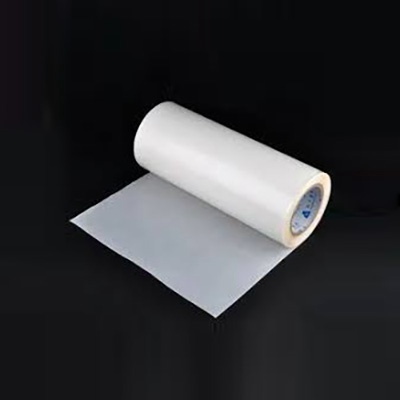
When substrates feature rough textures, porous structures, or endure extreme mechanical stress, low-tack options instantly fail. High-tack films step in to deliver heavy-duty security. The deliberately thick adhesive layer physically conforms to uneven surface topography. This ensures the adhesive contacts the deep valleys of the material, not just the highest microscopic peaks.
Specify high-tack films for woven carpets, textured automotive plastics, and roughly brushed aluminum extrusions. They also safeguard matte-finish laminates and metal surfaces undergoing intense deep-draw stamping, laser cutting, or aggressive roll-forming procedures.
These robust films must maintain absolute, unwavering adherence during aggressive mechanical processing. They should survive extended rough handling on the factory floor without displaying any edge lift, bubbling, or premature separation.
Using heavy adhesives requires careful monitoring. If you miscalculate the environment or duration, the consequences become very expensive.
Adhesive Transfer: This remains the most dreaded risk associated with high-tack films. If left on too long, or subjected to intense heat, a structural failure occurs. The adhesive's bond to your product substrate eventually surpasses its bond to the plastic film backing. When an operator finally peels the film, thick patches of glue stay stubbornly behind.
Substrate Damage: Over-adhesion on fragile surfaces triggers catastrophic physical damage. It can cause immediate paint delamination, ripping fresh coatings straight off the metal. On carpets or porous materials, excessive tack causes severe fiber tear upon removal, ruining the final product completely.
Selecting the precise tack level requires a methodical, engineering-based approach. We strongly advise evaluating four distinct dimensions to guarantee optimal field performance and eliminate costly errors.
The fundamental rule of protective film is absolute. The rougher the surface, the higher the tack required to achieve sufficient contact area. Smooth, mirror-like surfaces provide complete contact for the adhesive layer. Rough, textured surfaces only touch the adhesive at their highest peaks. You must specify a thicker, higher-tack adhesive. This extra mass flows down into the surface valleys, creating the mechanical grip necessary to stay attached.
Nature relentlessly destroys adhesive polymers. We must account for both solar radiation and thermal extremes. UV light degrades adhesive chains over extended periods. This chemical breakdown causes high-tack films to bake directly into the surface, forming a concrete-like bond. Conversely, freezing temperatures harden acrylic adhesives. A rigid, frozen adhesive loses its initial tack entirely, making low-tack films fall off in winter shipping yards.
You must establish rigid timelines for film removal. Adhesives are viscous liquids; they flow and build strength continuously over time.
Short-term operations: The film is applied and removed within a few days, allowing for higher tack usage without severe risk.
Medium-term operations: The protective layer remains on the product for several weeks during local transit.
Long-term operations: The film stays applied for up to six months in harsh outdoor conditions, necessitating highly stabilized, UV-resistant formulas.
Assess whether the film must survive severe mechanical stress before its eventual removal. Ask your engineering team if the protected material undergoes CNC routing, heavy bending, stamping, or adjacent painting processes. Aggressive metal fabrication requires high shear resistance. This prevents the film from sliding off or wrinkling while clamped in heavy machinery.
Tack Classification | Optimal Surface Profile | Common Downstream Processes | Primary Failure Risk |
|---|---|---|---|
Low-Tack (1-6 oz/in) | Ultra-smooth, Glass, High Gloss | Light assembly, manual handling | Edge lift, transit blow-off |
Medium-Tack (6-15 oz/in) | Semi-smooth, Painted Metals | Light bending, roll forming | Mismatched surface energy |
High-Tack (15-40+ oz/in) | Textured, Porous, Matte Finish | Deep-draw stamping, laser cutting | Adhesive transfer, surface tearing |
Relying exclusively on theoretical spec sheets is a pervasive industry mistake. You must implement physical, standardized testing protocols to mitigate real-world manufacturing risks effectively.
Immediate peel tests provide highly inaccurate data. You cannot apply a test film, peel it off five minutes later, and declare the trial a success. Adhesive polymers require significant time to wet out and anchor securely to the substrate. Adhesion builds steadily over 48 to 72 hours. You must wait at least three full days before evaluating the true, finalized removal strength using a dynamometer or manual pull.
We heavily recommend testing applied samples in dedicated environmental chambers. Expose the film-covered substrate to extreme heat, intense UV radiation, and high humidity cycles. This stringent process simulates long-term, trans-oceanic container shipping conditions. It immediately reveals whether the adhesive will transfer or leave ghosting marks on your substrate after sitting in a blistering warehouse for three months.
Chemical reactions frequently occur between specific adhesive formulas and un-cured surface coatings. You must strictly warn your production team about outgassing from fresh paint, powder coats, or clear finishes. If a painted surface has not fully cured, trapped solvent gases will interact directly with the film's adhesive layer. This volatile chemical interaction permanently fuses the protective film to the painted surface, ruining the manufactured part entirely.
Selecting the right tack level is always a delicate, high-stakes balancing act. You must weigh the need for absolute protection security against the requirement for swift, clean removal efficiency. Too much grip causes logistical nightmares and ruined finishes. Too little grip leaves your valuable goods entirely vulnerable to devastating physical damage during transit.
Advise your procurement decision-makers to aggressively request sample rolls of varying tack levels from their manufacturers. You should never rely solely on digital spec sheets or laboratory calculations. Hands-on, environmental evaluation on the factory floor remains paramount to success.
The final, unbreakable rule of protective film procurement is simple. Always test the film on the exact production substrate. Never run tests on a visually similar or theoretical material. Even microscopic variations in surface gloss, paint chemistry, or metal porosity will drastically alter how the adhesive behaves.
A: We recommend using non-abrasive citrus-based solvents or isopropyl alcohol, depending heavily on the substrate's chemical resistance. Combine this solvent application with gentle heat from a standard heat gun. The heat softens the hardened adhesive polymers, allowing the solvent to break the chemical bond safely without scratching or clouding the underlying surface.
A: Generally, no. Medium tack formulas may adhere initially during application, but they lack the heavy adhesive mass required to maintain a secure grip on textured valleys. Over a short time, the film will begin to pull away from the microscopic low points. This leads directly to edge-lift and eventual failure during transit.
A: Yes. You should always conduct application at room temperature. Cold environments stiffen the adhesive, significantly reducing its initial tack and wetting ability. Conversely, high heat softens the adhesive mass, drastically increasing the risk of residue transfer when operators attempt to peel the film later.


